
Hyperparathyroidism
What is hyperparathyroidism?
Hyperparathyroidism is a relatively common endocrine disorder where there is an abnormal increase in parathyroid hormone (PTH) secreted by the parathyroid glands. Parathyroid hormone is crucial to managing calcium levels in the body — PTH signals the body to increase calcium when levels are low. In patients who do not have a calcium deficiency, an abnormally elevated PTH can lead to abnormally elevated calcium levels.
Symptoms of hyperparathyroidism
The severity of complications depends on the severity of the hyperparathyroidism. Some patients may not experience any symptoms. Surgery is the definitive treatment for primary hyperparathyroidism and is considered to prevent ongoing calcium-related complications.
- Osteoporosis — weak, brittle bones which can lead to fractures or bone pain
- Kidney stones or declining kidney function
- Muscle cramps, aches, and fatigue
- Neuropsychological symptoms such as poor concentration, low mood, and brain fog
- Persistently elevated calcium and parathyroid hormone levels

Causes of hyperparathyroidism
There are many causes of hyperparathyroidism, with the most common being primary hyperparathyroidism. Elevated parathyroid hormone can also occur in chronic kidney disease, vitamin D deficiency, lithium-related disease, rare genetic syndromes, or normocalcaemic hyperparathyroidism.
- Primary hyperparathyroidism (PHPT) — caused by a single parathyroid adenoma in about 80% of patients, four-gland enlargement in around 15%, and multiple adenomas in 2–4%. Some adenomas occur in ectopic locations.
- Secondary hyperparathyroidism — elevated PTH driven by another chronic condition causing low calcium, most commonly chronic kidney disease
- Lithium-induced hyperparathyroidism — prolonged lithium therapy for bipolar disorder or acute mania can alter calcium and PTH regulation
- Normocalcaemic hyperparathyroidism — elevated PTH with normal calcium levels
- Vitamin D deficiency — low vitamin D impairs calcium absorption, prompting the parathyroid glands to overproduce PTH
- Parathyroid cancer — a very rare cause, accounting for less than 0.5% of hyperparathyroidism cases
- Genetic conditions — up to 10% of PHPT has a genetic basis, including Multiple Endocrine Neoplasia (MEN) syndromes and familial hypocalciuric hypercalcaemia
Risk factors
- Specific germline and somatic mutations
- Chronically low dietary calcium intake
- Obesity
- Prolonged use of furosemide
- History of neck radiation therapy
- Lithium therapy
- Hypertension
- Physical inactivity
Investigations and localisation imaging
The purpose of the workup is to confirm the diagnosis biochemically and localise the abnormal gland before surgery where possible. For some patients, an abnormal gland cannot be localised on standard imaging studies.
- Blood tests including intact PTH, calcium, corrected calcium, and vitamin D levels
- Ionised calcium blood test in selected patients for more precise calcium measurement
- 24-hour urinary calcium and creatinine excretion test to distinguish primary hyperparathyroidism from familial hypocalciuric hypercalcaemia
- Neck ultrasound to assess the thyroid and identify possible abnormal parathyroid tissue
- Parathyroid sestamibi scan — a nuclear medicine study to localise the overactive gland
- 4D parathyroid CT scan for detailed cross-sectional localisation
- PET-Choline scan — used less commonly in complex or reoperative cases where standard imaging has not localised the adenoma
- Bone mineral density scan to establish a baseline if osteoporosis is suspected
Surgery options
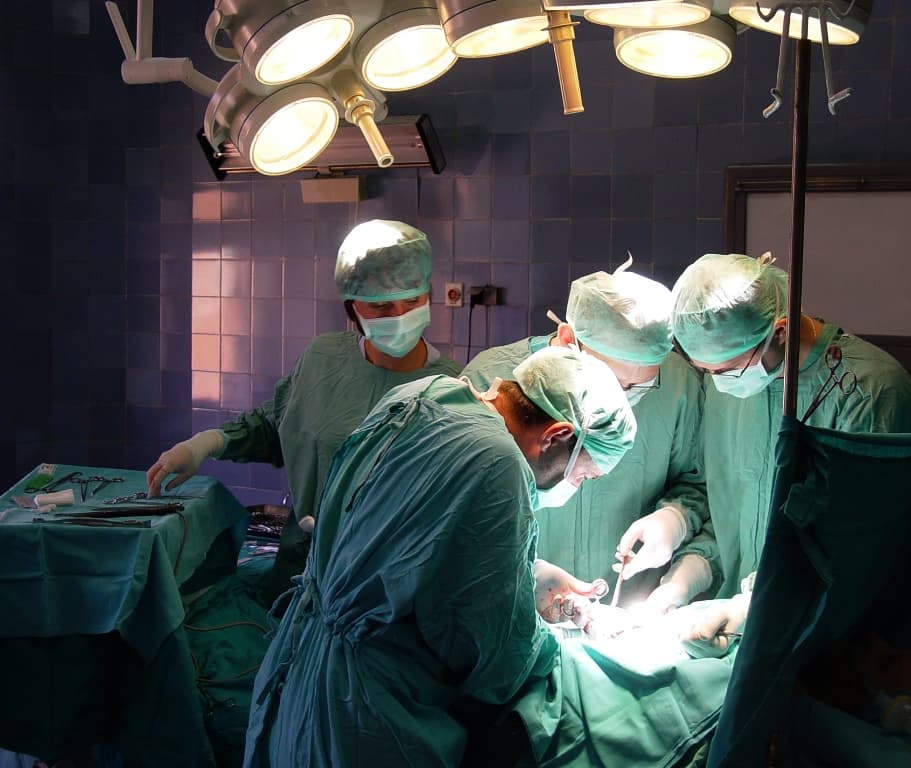
Surgery is the definitive treatment of primary hyperparathyroidism. The operation offered depends on whether one gland is accurately localised and whether multi-gland disease is suspected.
- Minimally invasive (keyhole) parathyroidectomy — offered when one enlarged parathyroid gland has been precisely localised on pre-operative investigations
- Open parathyroidectomy with four-gland exploration — offered when more than one adenoma is suspected, or when localisation studies could not identify the enlarged gland
- The type of surgery offered depends on additional clinical factors and is at the discretion of the treating surgeon
Risks, cure, and follow-up
Following successful surgery and removal of the enlarged gland, PTH and calcium levels usually fall back into the normal range, indicating surgical cure.
There is a 2–3% chance of recurrence following a successful parathyroidectomy. An annual calcium and PTH check is recommended to ensure that there is no recurrence.
Specific risks include permanent voice change, postoperative bleeding, infection, scar issues, and low calcium, although these risks are low in experienced endocrine surgery hands.
Before Surgery
What time should I go to hospital?
If you are having an operation in the public hospital, the hospital will contact you about 1 month prior to surgery and ask you to attend for a preoperative assessment by the hospital anaesthetic team. The hospital will notify you of the time to arrive on the day of your operation.
In the private hospital setting, your date will be allocated at the time of consultation or soon thereafter and you will be seen by your private anaesthetist prior to or on the day of surgery. The private hospital will notify you, the day prior to surgery, of the time to arrive on the day of your operation.
Do I need to fast?
Yes, you do. Patients having morning surgery need to be fasted from 12 midnight and patients having afternoon surgery are permitted to have a light breakfast and fast from 0700 hours.
Medications
All patients who are taking any of the below blood thinning medication must inform Prof Sidhu or his team at the time of booking surgery.
- Plavix
- Xarelto
- Eliquis
- Apsirin
- Warfarin
- Clopidogrel
Professor Sidhu will discuss these medications at the time of consultation.
Neck exercises
To gain access to the parathyroid glands the neck is tilted backwards. To help relieve soreness and swelling we recommend neck exercises prior to the surgery. Neck exercises booklet can be found here.
In Hospital
Your parathyroid surgery is undertaken using a general anaesthetic: you will be asleep for the operation. Local anaesthetic is used in the neck area to numb the skin for 12-16 hours after surgery. The anaesthetic tube used during surgery can sometimes cause a sore throat afterwards. You will be given tablets for pain relief afterwards. Sometimes by having the neck extended during parathyroid surgery, patients complain of pain in the back of their neck or head-neck exercises and physiotherapy do help in alleviating this pain.
You may wake up with an ice pack on your neck to be used for the first 12-24 hours to minimize skin swelling.
The hospital stay is usually for 1 or 2 nights. Most patients having parathyroids removed will stay 1 night.
After Discharge
All patients will be given a sheet to explain what to expect following the parathyroid surgery. If this does not happen, please download here.
The wound is closed with a dissolving suture and the steristrip dressing stays on for 10 days. You can shower as normal. After 10 days, the steristrip can be replaced with a brown micropore tape. This can be changed every 2 days. Professor Sidhu will review the scar at the post operative appointment and advise of ongoing scar management.
No driving is permitted for 3-4 days following the parathyroid surgery and you can return to work in 1-2 weeks depending on the type of work you do.
Normal Symptoms After Surgery
A number of symptoms can occur following parathyroid surgery, which you don't have to worry about. These are normal and will settle with time. They include:
- Sensation of difficulty swallowing
- Sensation of tightness in the neck without any obvious neck swelling
- Numbness in the skin above and below the incision
- Throat irritation from the anaesthetic tube
- Intermittent voice change. This can range from true hoarseness of voice all the time to fluctuations in volume and clarity especially towards the end of the day.
Recurrent laryngeal nerve injury is usually temporary in 2-3% of people and recovers in a few weeks following surgery.
Symptoms you do have to worry about
- Delayed neck swelling producing difficulty breathing
- Redness and heat in the wound with a high temperature over 38 degrees
If any of these symptoms occur after your parathyroid surgery, please contact Professor Sidhus team review the postoperative instruction sheet or go to your local GP or hospital if you are a country patient.